Digital Marketing for Tour Operators: A Guide
I ran a tour business. I spent money on marketing that didn’t work. I spent money on marketing that did work. And after 15 years in marketing driving over $100 million in revenue for tech companies, I’ve seen what separates the operators who grow from the ones who stay stuck.
This isn’t a fluffy overview of “what is digital marketing.” This is a field guide for tour and activity operators who want more bookings, written by someone who’s been on both sides of the counter.
The Digital Marketing Channels That Actually Matter
Let’s cut through the noise. There are a million channels you could spend time on. Here are the ones that consistently drive bookings for tour operators, ranked by long-term ROI:
- SEO & Organic Content — the highest-ROI channel for tour operators, period
- Google Ads — the fastest way to drive immediate bookings
- Email Marketing — the most underrated channel in the industry
- Social Media — great for brand building, terrible as a primary booking channel
- OTA Listings — necessary evil, but don’t let them own your customers
Most operators get this backwards. They start with social media because it’s “free,” ignore SEO because it’s “slow,” and end up dependent on OTAs because nothing else is working. Don’t be that operator.
SEO: Your Most Valuable Long-Term Asset
If I could only invest in one digital marketing channel for a tour business, it would be SEO every single time. Here’s why.
The Math is Simple
A well-written blog post about “Best Things to Do in [Your City]” can rank on Google for years. That single post might drive 500 visitors per month. At a 2% booking conversion rate, that’s 10 bookings per month from one piece of content you created once.
Now multiply that by 20 blog posts. That’s 200 bookings per month from organic search — at zero ongoing cost. Compare that to spending $2,000/month on Google Ads for the same traffic. Over two years, the SEO approach costs you maybe $5,000 in content creation. The ads approach costs $48,000.
What to Actually Do
Keyword Research
Stop guessing. Use Google Search Console (free) to see what queries are already driving impressions to your site. Then use a tool like Ahrefs or SEMrush to find what your competitors rank for that you don’t.
For tour operators, your keyword targets typically fall into three buckets:
- Destination keywords: “things to do in [city]”, “best [season] activities in [location]”, “[city] travel guide”
- Activity keywords: “best kayak tours in [city]”, “snorkeling tours near me”, “[activity] for beginners”
- Planning keywords: “best time to visit [destination]”, “what to wear on a [activity]”, “[destination] itinerary”
The destination and planning keywords are your goldmine. They have high search volume, low competition (most tour operators ignore them), and they capture travelers early in their decision-making process.
Technical SEO
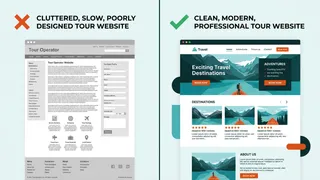
Your website needs to be fast, mobile-friendly, and properly structured. This isn’t optional — it’s table stakes. Specifically:
- Page load times under 3 seconds (preferably under 2)
- Mobile-first design (over 60% of travel searches happen on mobile)
- Proper schema markup (TourOperator, Event, Product schemas)
- Clean URL structure
- XML sitemap submitted to Google Search Console
If you’re on a modern platform like Gondola, most of this is handled for you automatically. If you’re on WordPress, you’re probably spending hours on plugins trying to get this right.
Local SEO
Tour operators are inherently local businesses. Your Google Business Profile is arguably the most important digital asset you own after your website. Optimize it:
- Complete every field. Every. Single. One.
- Add photos regularly (Google rewards active profiles)
- Respond to every review within 24 hours
- Post updates at least weekly
- Make sure your NAP (Name, Address, Phone) is consistent everywhere
Content Strategy
Publish evergreen content that captures travelers during the planning phase. A blog post about “Top 10 Things to Do in Key West with Kids” will drive traffic for the next five years. A social media post about the same topic will be buried in 48 hours.
Your content should follow the 80/20 rule: 80% value, 20% promotion. If every blog post is a sales pitch, nobody will read it and Google won’t rank it. Write genuinely helpful content that happens to come from the tour operator people will want to book with.
AI Search Optimization
Here’s something most operators aren’t even thinking about yet: AI search. When someone asks ChatGPT, Perplexity, or Google’s AI Overview “what are the best boat tours in Key West?”, does your business show up?
AI search engines pull from structured data and comprehensive content. Operators who optimize for this now will have a massive advantage in the next 2-3 years. At Gondola, we’ve built a dedicated “LLM Start Here” page into every website specifically for this purpose — it’s structured data that tells AI models exactly what your business offers.
Google Ads: Immediate Bookings on Demand
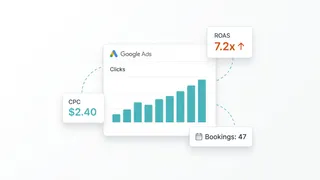
If SEO is a long-term investment, Google Ads is immediate cash flow. When someone searches “book a sunset sailing tour in Charleston,” they’re ready to buy. A well-placed ad captures that intent and converts it into a booking.
Why Google Ads Works for Tour Operators
- Intent-based: You’re advertising to people actively searching for what you sell
- Trackable: Every click, every conversion, every dollar is measurable
- Controllable: Set your budget, target your geography, pause whenever you want
- Fast: Go from zero to bookings within days
The Catch
Google Ads is not a DIY project. I’ve seen too many operators waste thousands because they didn’t understand the difference between broad match and exact match keywords, or because they were bidding on terms that attract browsers instead of bookers.
The difference between a well-managed Google Ads campaign and a poorly managed one can be 10x in ROI. If your budget for a Google Ads manager is $0, you’re better off spending that money on content instead.
What Good Looks Like
A well-run Google Ads campaign for a tour operator should:
- Target high-intent keywords (“book [activity] in [city]”, “[activity] tours near me”)
- Use location targeting to focus on travelers in your service area or their departure cities
- Have dedicated landing pages for each ad group (don’t send ad traffic to your homepage)
- Track conversions all the way through to the booking confirmation
- Achieve at least a 3:1 return on ad spend (ROAS) after the first 90 days
Email Marketing: The Sleeping Giant
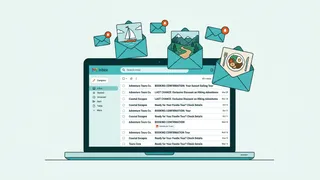
Here’s a stat that should wake you up: email marketing has an average ROI of $36 for every $1 spent. For tour operators, it’s potentially even higher because your customers are people who’ve already demonstrated they like your type of experience.
Build Your List
Every person who visits your website, fills out a contact form, or makes a booking should be on your email list. This is YOUR audience — not Facebook’s, not Google’s, not TripAdvisor’s. It’s the one channel no algorithm change can take away from you.
Offer a genuine lead magnet to grow your list:
- A downloadable “[Destination] Travel Guide”
- A “What to Pack” checklist
- An “Insider Tips” one-pager for your area
What to Send
Most tour operators either don’t email at all or only email promotions. Both approaches leave money on the table.
What works:
- Pre-trip content: “What to expect on your tour” emails that reduce no-shows and build excitement
- Post-trip follow-up: Request a review 24-48 hours after the experience
- Seasonal campaigns: “Summer calendar is filling up — here’s what’s new” in spring
- Destination content: Share your blog posts about the area (cross-channel compounding)
- Repeat customer incentives: People who’ve booked once are 5x more likely to book again
What doesn’t work:
- Generic “10% off” blasts with no context
- Monthly newsletters that say nothing
- Over-emailing (2-4 emails per month is the sweet spot for most operators)
Social Media: Great for Brand, Terrible for Direct Bookings
I’m going to say something unpopular: social media is overrated as a booking channel for tour operators.
Don’t get me wrong — it’s important. Your Instagram and TikTok presence builds brand awareness, social proof, and trust. When someone is deciding between two kayak tours, they’ll check Instagram. You need to be there.
But if you’re spending 20 hours a week on social media and getting zero bookings from it, your time is better spent elsewhere. The organic reach on social platforms keeps declining, and the algorithm doesn’t care about your content calendar.
What Actually Works on Social
- User-generated content: Reshare your customers’ posts. It’s authentic and free.
- Short-form video: 15-30 second clips of actual tour moments. Raw footage outperforms polished content.
- Behind-the-scenes: Show the personality behind the tours. People book people, not products.
- Review highlights: Turn 5-star reviews into visual social posts (this is exactly what Echo Social AI automates for Gondola customers).
What Doesn’t Work
- Spending hours crafting perfect posts that 200 people see
- Buying followers or engagement
- Treating social as your primary booking channel
- Ignoring it entirely (your absence is noticed)
Spend 30 minutes a day max on social. Invest the rest in SEO and email.
OTAs: The Necessary Evil
TripAdvisor, Viator, GetYourGuide, and other OTAs will always be part of the landscape. They drive bookings. They also take 20-30% of your revenue, own the customer relationship, and can change their algorithm overnight.
The Right Approach
Use OTAs as a customer acquisition channel, not a crutch. Every customer you acquire through an OTA should become a direct customer next time:
- Collect email addresses from every OTA booking (check your OTA’s terms — most allow this for operational purposes)
- Deliver an exceptional experience so they remember YOUR brand, not the OTA’s
- Follow up directly with a rebooking incentive
- Make sure your direct website offers a better price than the OTA
The goal: reduce your OTA dependency from 60-70% of bookings to 20-30% within two years. The math on this is staggering. If you’re doing $500K in annual revenue through OTAs at 25% commission, that’s $125,000 per year going to someone else. Convert half of those to direct bookings and you just gave yourself a $62,500 raise.
Putting It All Together
Here’s the allocation I’d recommend for a tour operator spending 10-15 hours per week on marketing:
| Channel | Time | Expected Timeline to ROI |
|---|---|---|
| SEO & Content | 40% | 3-6 months |
| Google Ads | 20% | 1-2 weeks |
| Email Marketing | 20% | 1-3 months |
| Social Media | 15% | Ongoing (brand) |
| OTA Optimization | 5% | Immediate |
If you don’t have 10-15 hours per week (and most operators don’t), prioritize in this order:
- Get your website right (platform, speed, SEO basics)
- Set up Google Ads with a specialist
- Publish one piece of evergreen content per month
- Build and email your list
- Post on social when you have something worth sharing
The operators who win aren’t the ones doing everything. They’re the ones doing the right things consistently.
Stop Paying Agencies to Do What Technology Does Better
Here’s the uncomfortable truth about the tourism marketing industry: most of the services agencies sell you — website design, basic SEO, content publishing, social media management — are things that modern platforms handle automatically or that you can do yourself with the right tools.
You don’t need to pay a designer $5,000+ to build a website, then $200/month to maintain it, then $500/month for someone to write blog posts, then $800/month for social media management. That’s $1,500/month in recurring fees before you’ve spent a dollar on actual advertising.
A modern website builder purpose-built for tour operators should give you:
- A professional, conversion-optimized website out of the box
- Built-in SEO that handles the technical stuff
- AI tools that help you manage content and products
- Social media content generated from your customer reviews
- The ability to make changes yourself, right now, without submitting a ticket
Technology has gotten good enough that the agency model is outdated for most operators. Save the agency budget for the things that actually require human expertise — like Google Ads management and high-quality content writing. Everything else, the platform should handle.
The Bottom Line
Digital marketing for tour operators isn’t complicated. It’s a handful of channels executed consistently:
- Build a fast, SEO-optimized website on a platform that does the technical work for you
- Publish evergreen content that captures travelers during the planning phase
- Run targeted Google Ads if you need immediate bookings
- Build an email list and actually use it
- Maintain a social presence without making it your full-time job
- Reduce OTA dependency every year
The operators who do these things well — not perfectly, just consistently well — are the ones who grow. The ones who chase every shiny new channel, spend 4 hours a day on TikTok, and never get around to fixing their website? They stay stuck.
Pick your channels. Execute consistently. Measure what matters. That’s it.
Frequently Asked Questions
SEO and content marketing offer the best long-term ROI for tour operators because they compound over time. But the best short-term channel depends on your situation — Google Ads for immediate bookings, social media for brand awareness, and email for repeat customers. Most successful operators combine 2-3 channels rather than relying on just one.
A common benchmark is 5-10% of revenue, but the right amount depends on your growth goals and stage. A new operator might invest more heavily in SEO and paid ads to build awareness, while an established operator might focus on content and email. The key is tracking cost-per-acquisition by channel so you know what's actually working.
Social media helps with brand awareness and trust-building, but it rarely drives direct bookings on its own. The most effective approach for tour operators is using social proof (customer photos, reviews, behind-the-scenes content) to reinforce what travelers find through search. Don't rely on social media as your primary booking channel.