How to Start a Fishing Charter Business
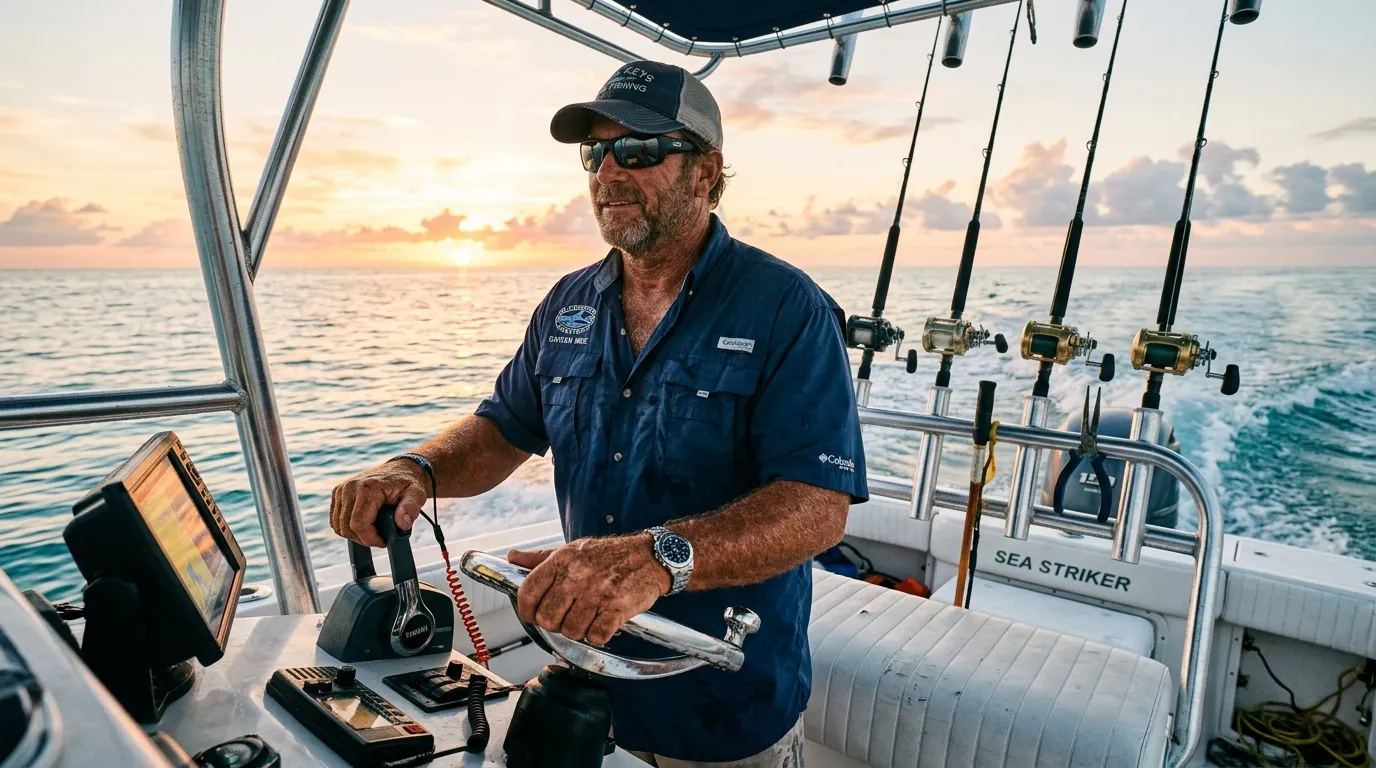
A fishing charter business lets you turn saltwater expertise into a livelihood — taking paying customers out on your boat to fish inshore flats, nearshore reefs, or offshore blue water. It is one of the most rewarding niches in the tour and activity industry, but it comes with serious regulatory, financial, and operational complexity that separates the captains who make it from those who sink their savings.
This guide covers every step from getting your captain’s license to filling your calendar year-round.
Getting Your Captain’s License
Before you take a single paying passenger, you need a United States Coast Guard (USCG) Captain’s License. There are no shortcuts here — operating without one is a federal offense that can result in fines up to $100,000 and seizure of your vessel.
OUPV (Six-Pack) License is the most common starting point. It allows you to carry up to six paying passengers on uninspected vessels. Requirements include:
- 360 days of documented sea time (at least 90 days in the last three years)
- A written exam covering navigation, rules of the road, seamanship, weather, and safety
- Physical exam by an approved physician
- Drug test (DOT-approved 5-panel)
- Background check and fingerprinting through the Transportation Security Administration
- First aid and CPR certification
Master License is the upgrade if you plan to run larger vessels with more than six passengers. It requires 720 days of sea time and covers inspected vessels.
Timeline and costs: Most captains complete a prep course (2-3 weeks, $1,500-3,500) before sitting for the exam. Total licensing costs including the course, physical, drug test, TWIC card, and application fees typically run $3,000-5,000. The entire process from first application to license in hand takes 3-6 months.
Start documenting your sea time now if you haven’t already. The USCG accepts logbooks, vessel documentation, and letters from vessel owners. Every day you spend on the water counts toward your requirement.
Choosing Your Boat
Your boat is the single largest investment you will make and the single biggest factor in what kinds of trips you can offer. Get this decision right.
Inshore vs. Offshore
Inshore boats (bay boats, flats skiffs, center consoles 18-24 feet) are the lower-cost entry point. They work for targeting redfish, speckled trout, snook, tarpon, and other species in bays, flats, and nearshore waters. A solid used bay boat runs $30,000-80,000 with motor.
Offshore boats (center consoles 28-42 feet, sportfishing boats, catamarans) open up deep-sea fishing for tuna, mahi-mahi, marlin, grouper, and snapper. They cost significantly more — $100,000-500,000+ — but command higher trip rates. Fuel costs are also substantially higher.
New vs. Used
Used boats make more financial sense for most first-time charter operators. A 5-7 year old center console with a repowered or well-maintained outboard gives you 80% of the capability at 50% of the price. Have any used boat surveyed by a certified marine surveyor before purchase ($500-1,500 — money well spent).
Key Specs to Prioritize
- Stability and deck space — your customers need room to fish without tripping over each other
- Rod storage and holders — a minimum of 8-12 rod holders for a six-pack charter
- Live well capacity — big enough for both live bait and keeping catch
- Reliable outboard power — Yamaha, Mercury, and Suzuki all have strong reputations in the charter fleet
- Electronics — quality GPS/chartplotter, fish finder, and VHF radio are non-negotiable
- Shade — a T-top or hardtop matters more than you think when customers are in the sun for 4-8 hours
Business Setup
Entity Structure
Form an LLC at minimum. A fishing charter operation carries real liability — hooks in hands, passengers falling overboard, fish-related injuries — and you need a legal barrier between your business and personal assets. An LLC costs $50-500 depending on your state and takes a few days to set up.
Permits and Licenses
Beyond your USCG captain’s license, you will need:
- State business license — varies by state, typically $50-200 annually
- State fishing guide license — most coastal states require a separate guide permit. In Florida, it is the Saltwater Fishing Charter Captain License. In Texas, the Fishing Guide License. Check your state’s fish and wildlife agency.
- Federal fishing permits — if you are targeting federally managed species (reef fish in the Gulf, for example), you may need a federal charter/headboat permit. These can be expensive and hard to obtain in some fisheries.
- Local permits — some municipalities require additional business permits, especially if you operate from a public boat ramp or marina
- Employer Identification Number (EIN) — free from the IRS, required for tax purposes and opening a business bank account
Bank Account and Bookkeeping
Open a dedicated business checking account immediately. Commingling personal and business funds undermines your LLC protection. Use accounting software like QuickBooks or Wave from day one — you will thank yourself during tax season.
Insurance
Marine insurance for a charter operation is not optional and not cheap. You need several layers of coverage.
Protection and Indemnity (P&I) insurance covers injury to passengers and crew, damage to other vessels or property, and wreck removal. This is your core charter liability policy. Expect $3,000-8,000 annually depending on your vessel size, waters fished, and passenger capacity.
Hull insurance covers physical damage to your boat from collision, grounding, storm, fire, or theft. Premiums are typically 1.5-3% of your vessel’s agreed value.
Jones Act coverage is critical if you hire any crew (mates, deckhands). The Jones Act gives maritime workers broad rights to sue employers for negligence. Without proper coverage, a crew injury could bankrupt your operation. This is not something to skip.
Uninsured boater coverage protects you if another vessel without insurance causes damage.
Work with a marine insurance broker who specializes in charter operations — not a general business insurance agent. Companies like Global Marine Insurance, Geico Marine, and BoatUS offer charter-specific policies. Get quotes from at least three brokers.
Pricing Strategy
Pricing too low is the most common mistake new charter captains make. You are not competing on price — you are competing on experience, knowledge, and fish-catching ability.
Standard Rate Structures
Half-day trips (4 hours):
- Inshore: $400-700
- Nearshore: $600-1,000
- Offshore: $800-1,400
Full-day trips (6-8 hours):
- Inshore: $700-1,100
- Nearshore: $1,000-1,500
- Offshore: $1,400-2,500+
Private vs. shared trips: Private charters (one group books the whole boat) are your bread and butter. Shared or “split” charters fill empty seats but require more logistics. Price shared seats at 30-40% of the private rate per person.
What to Include
Most successful charters include all tackle, bait, ice, fish cleaning, and licensing in their rate. This simplifies the customer’s decision and avoids nickel-and-diming that leads to bad reviews. Factor these costs into your pricing rather than charging separately.
Seasonal Pricing
Raise rates 15-25% during peak season (summer in most markets, winter in South Florida and the Gulf Coast). Offer modest discounts during shoulder seasons to maintain bookings. Never race to the bottom during slow months — discount your rate and you discount your reputation.
Equipment and Tackle Setup
Stock your boat like a professional, not a weekend angler. Your tackle is a business tool, and customers judge you by it.
Rods and reels: Carry 12-16 rod and reel combos covering the species you target. For inshore, that means medium-light spinning outfits for trout and redfish, medium-heavy for tarpon and snook. For offshore, you need trolling setups, jigging rods, and bottom-fishing rigs. Penn, Shimano, and Daiwa all make commercial-grade reels that hold up to charter abuse.
Terminal tackle: Maintain an organized tackle system with hooks, leaders, weights, jigs, lures, and rigs for every situation. Restock weekly. Running out of a critical hook size mid-trip is unacceptable.
Safety equipment (USCG-required):
- Life jackets for every passenger plus crew
- Throwable flotation device
- Fire extinguishers (number depends on vessel size)
- Visual distress signals (flares and/or electronic)
- Sound-producing device (horn or whistle)
- Navigation lights
- First aid kit
Additional equipment: Gaff, landing net, fish grips, pliers, cutting board, cooler for catch, camera for hero shots, sunscreen, and seasickness remedies (Dramamine or Bonine). The captain who hands a green-faced customer a ginger ale and a Bonine earns a five-star review.
Building Your Online Presence
Your website is where bookings happen. In a business where customers decide in minutes and book on their phones, your online presence is not secondary to your fishing ability — it is equally important.
Website
You need a website that loads fast, looks professional on mobile, and makes booking effortless. Generic website builders were not designed for tour and activity operators. A platform built specifically for this industry — like Gondola — handles booking integrations, SEO optimization, and mobile-first design so you can focus on fishing. Check out fishing charter websites built on Gondola to see what a purpose-built site looks like.
Key pages your site needs:
- Trip types with clear descriptions, rates, duration, and what is included
- Photo gallery showing real catches, happy customers, and your boat
- About/Captain page with your credentials, experience, and personality
- Booking/availability calendar integrated with your reservation system
- Reviews and testimonials prominently displayed
Fishing Reports
Publish regular fishing reports on your website — ideally weekly during peak season. Fishing reports serve three purposes: they show potential customers you are actively catching fish, they build SEO authority for local fishing-related searches, and they give you content to share on social media. A fishing report does not need to be long — 200-400 words with photos of recent catches, what bit, what bait worked, and current conditions.
Booking System
Use a booking system designed for tours and activities. You need online booking (not just a phone number), calendar management, automated confirmation and reminder emails, and the ability to collect deposits. Systems like FareHarbor, Peek, and Checkfront all work for charter operations and integrate with purpose-built websites.
Marketing
The best fishing charter captain in the world goes broke if nobody knows they exist. Marketing for a charter business is local, seasonal, and relationship-driven.
Local SEO
Claim and optimize your Google Business Profile immediately. This is the single most important marketing action you will take. Add photos weekly, respond to every review, post fishing reports as Google updates, and make sure your name, address, and phone number are consistent across every online listing. For a deep dive, read our guide on SEO for tour operators.
Online Directories and OTAs
List your charter on FishingBooker, TripAdvisor, GetMyBoat, and any regional fishing charter directories. These platforms take a commission (15-25%), but they put you in front of customers who are actively searching. Think of them as a customer acquisition channel, not your primary booking method. The goal is to earn direct bookings over time through your own website and repeat customers.
Tackle Shop and Marina Partnerships
Build relationships with local tackle shops, marinas, bait shops, and waterfront restaurants. Leave business cards and brochures. Offer a referral fee ($25-50 per booked trip) for businesses that send customers your way. These partnerships generate warm referrals that convert at a much higher rate than cold online traffic.
Social Media
Post your catches on Instagram and Facebook consistently. Short-form video of fish hitting lures, customers reeling in their first big catch, and scenic shots from the water perform extremely well. You do not need to be a content creator — just pull out your phone during the exciting moments. Tag your location every time.
Seasonal Content Strategy
Plan your marketing calendar around your fishery’s seasonal patterns. If kingfish run in March, start promoting kingfish trips in January. If tarpon season peaks in June, your website content and social posts should build anticipation starting in April. Match your marketing to the species your customers want to catch.
For a broader perspective on tour and activity marketing, our guide to starting a tour company covers strategies that apply across the industry.
Operations: Running Smooth Trips
Weather Policy
Establish a clear cancellation and reschedule policy for weather. Most charter captains use a captain’s-call policy: if conditions are unsafe, the captain cancels and the customer gets a full reschedule or refund. Define “unsafe” clearly in your booking terms — sustained winds over 20 knots, seas over 4 feet, lightning within 10 miles, or small craft advisories are common thresholds.
Communicate weather decisions early. Calling a customer at 4:30 AM to cancel a 6 AM trip is a bad experience. Monitor forecasts and reach out the evening before if conditions look questionable.
Safety Protocols
Safety is non-negotiable. Before every trip:
- Give a safety briefing covering life jacket locations, fire extinguisher locations, overboard procedures, and basic boat rules
- Check all safety equipment
- File a float plan with your marina or a trusted contact
- Check weather radar one final time before departing
Boat Maintenance
A broken-down boat cancels trips and kills your reputation. Maintain a rigorous schedule:
- Daily: Check oil, fuel, bilge, electronics, and safety gear
- Weekly: Inspect prop, anodes, belts, and hoses; wash and wax
- Monthly: Grease fittings, check steering and control cables, test battery
- Annually: Full engine service, bottom paint, trailer maintenance, electronics calibration
Keep a maintenance log. Document every oil change, impeller replacement, and repair. This protects your investment and helps when selling or insuring the vessel.
Managing Your Calendar
Maximize bookable days by being strategic with your schedule. Block off maintenance days, plan for weather cancellation buffers, and avoid overbooking during peak season (burnout is real). Most successful solo captains run 200-250 trips per year. Going beyond that leads to exhaustion, deferred maintenance, and declining trip quality.
The Bottom Line
Starting a fishing charter business is a significant undertaking that requires meaningful capital, federal licensing, and the operational discipline to run safe, enjoyable trips day after day. It is not a shortcut to an easy life on the water — it is a real business with real complexity.
But for captains who approach it with a plan, the rewards are genuine. You get to fish for a living, share the water with people who are having the best day of their vacation, and build something that is truly yours.
Get your captain’s license. Buy the right boat. Set up the business properly. Build a website that books trips while you sleep. And then go catch fish.
Frequently Asked Questions
Plan for $75,000 to $300,000+ depending on your boat. A used center console for inshore charters runs $30,000-80,000. Offshore sportfishing boats start at $100,000+. Beyond the boat, budget $5,000-15,000 for USCG licensing and inspections, $3,000-8,000 for marine insurance, $2,000-5,000 for tackle and safety equipment, and $2,000-5,000 for website, booking system, and initial marketing.
You need a USCG Captain's License (OUPV/Six-Pack for up to 6 passengers, or Master for larger vessels). Requirements include at least 360 days of documented sea time, passing a written exam, a physical exam, drug test, and background check. You'll also need a business license, state fishing guide permits, and marine liability insurance. Some states require additional certifications.
A solo captain running 200-250 trips per year at $800-1,500 per trip can gross $160,000-375,000. After expenses (fuel, bait, insurance, maintenance, slip fees, marketing), net income typically ranges from $60,000-150,000 for an owner-operator. Multi-boat operations can scale significantly higher.