How to Start a Jet Ski Rental Business
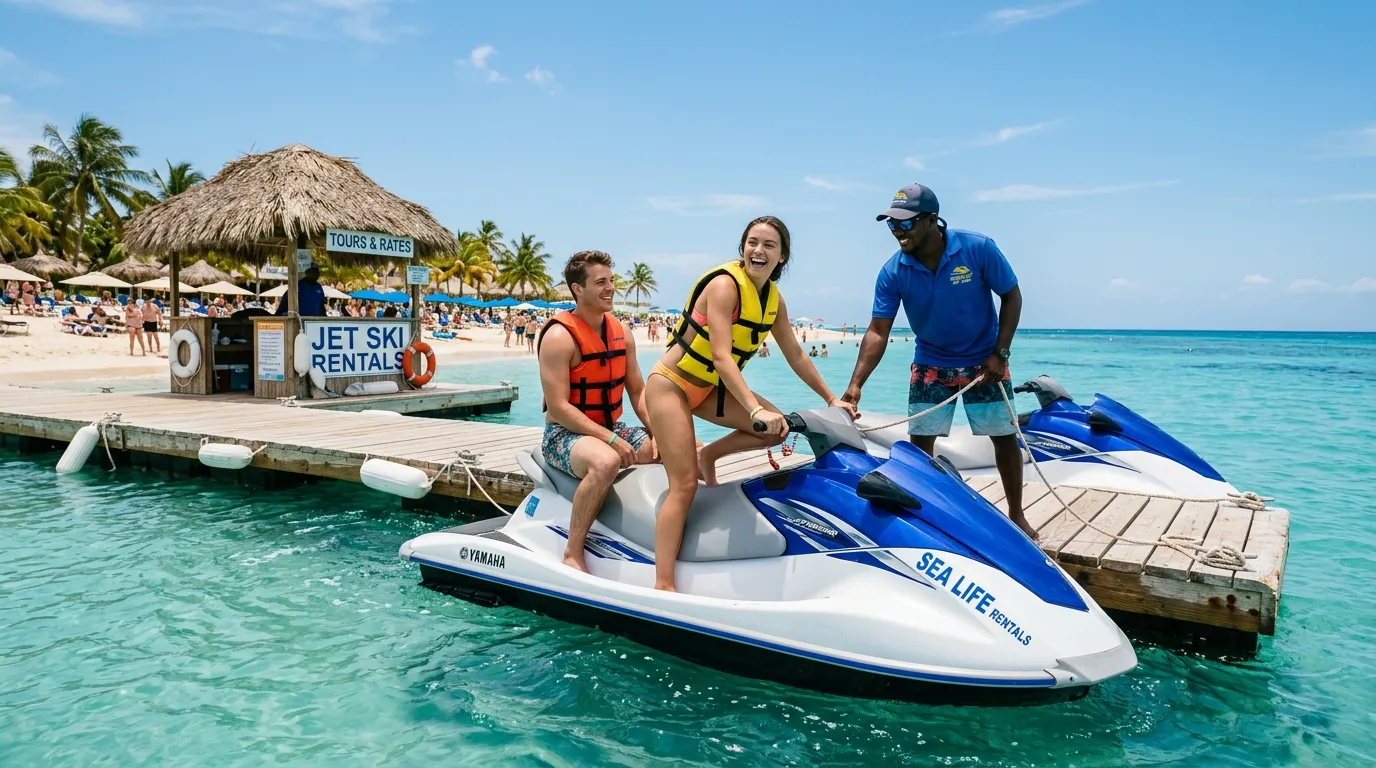
A jet ski rental business puts personal watercraft — also known as PWCs or WaveRunners — in the hands of vacationers, thrill-seekers, and locals who want time on the water without the commitment of ownership. Customers pay by the hour or half-day, take a quick safety briefing, and head out. It’s a straightforward model with strong seasonal demand, healthy margins, and relatively low overhead compared to other watercraft operations.
If you’re located near a coast, lake, or popular waterway and you’ve been thinking about turning that into a business, this guide walks through every step — from choosing your location and buying your fleet to getting insured, setting prices, and finding your first customers.
Research Your Market and Pick the Right Location
Location will make or break your jet ski rental business. You need a body of water with steady tourist traffic, easy shoreline access, and local regulations that allow PWC rentals.
Start by answering a few questions:
- Where do tourists and locals already go for water recreation? Look at popular beaches, resort areas, lakefront towns, and marinas.
- Who’s already renting jet skis there? Visit competitors, check their pricing, read their Google reviews. Are customers complaining about old equipment, poor service, or limited availability? Those are your openings.
- What’s the season length? A Florida operation can run nearly year-round. A Michigan lake business might have 4-5 months. Season length directly impacts revenue projections.
- Are there waterway restrictions? Some lakes ban PWCs entirely. Others have horsepower limits, no-wake zones, or hour-of-day restrictions. Contact your state’s Department of Natural Resources and local harbor authority before committing to a location.
The best spots combine high foot traffic with limited competition. A busy beach town with one outdated rental shop is a better opportunity than a crowded market with five well-run operators.
Set Up Your Business Structure
Get the legal foundation right from the start. Most jet ski rental operators form an LLC (Limited Liability Company) because it separates your personal assets from the business — critical in an industry where accidents can happen on the water.
Here’s your checklist:
- Form an LLC or corporation through your state’s Secretary of State office. Cost varies by state ($50-500).
- Get an EIN (Employer Identification Number) from the IRS. It’s free and takes five minutes online.
- Register for state and local business licenses. Requirements vary — some municipalities require specific watercraft rental permits.
- Open a business bank account. Keep personal and business finances completely separate.
- Set up accounting from day one. QuickBooks Online or Wave will handle what you need. Track every expense — fuel, maintenance, insurance, staff — because your margins depend on knowing your real costs.
Depending on your state, you may also need a seller’s permit if you charge sales tax on rentals, and a DBA (“doing business as”) filing if you operate under a name different from your LLC.
Build Your Fleet: Choosing and Buying Jet Skis
Your fleet is your biggest capital expense, so get this right.
New vs. used: New jet skis run $8,000-18,000 each depending on the model. Used units (2-3 years old, low hours) can cut that cost by 30-50%, but inspect them carefully. Rental machines take a beating — if you’re buying used from another rental operation, assume they’ve been ridden hard.
Best brands for rentals: Yamaha WaveRunners and Sea-Doo (by BRP) dominate the rental market. Both are reliable and have widely available parts. Yamaha’s EX and VX series are popular rental choices — they’re stable, fuel-efficient, and durable. Sea-Doo’s Spark and GTI lines fill a similar role.
Fleet size: Start with 4-6 jet skis. That’s enough to generate meaningful revenue without overextending your capital. You can always add more units in your second season based on demand. A fleet of 4 jet skis at $8,000-12,000 each puts your equipment investment at $32,000-72,000 before trailers and accessories.
Don’t forget the extras: You’ll need life jackets (Coast Guard-approved, multiple sizes), a safety lanyard for each PWC, a dock or floating platform, fuel storage, a trailer for transport, and basic tools for on-site maintenance.
Get the Right Insurance
Insurance is non-negotiable in the jet ski rental business, and it won’t be cheap. You’re putting inexperienced riders on powerful machines over open water — insurers know the risk profile.
Types of coverage you’ll need:
- Commercial watercraft liability: Covers injuries and property damage caused by renters. Expect to pay $3,000-8,000 per year for a small fleet, more in high-traffic tourist areas.
- Hull insurance: Covers damage to your jet skis. Deductibles are typically $500-1,000 per incident.
- General liability: Covers slip-and-fall at your dock, signage injuries, and other premises claims. Roughly $1,000-3,000 per year.
- Workers’ compensation: Required in most states once you hire employees.
- Umbrella policy: Adds an extra layer of protection above your primary policies. Highly recommended given the inherent risks of watercraft.
Total insurance costs for a 4-6 jet ski operation typically land between $5,000-15,000 per year. Shop multiple marine insurance brokers — rates vary significantly.
Reduce your risk (and premiums): Require every renter to sign a detailed liability waiver. Conduct mandatory safety briefings before each ride. Set age minimums (16+ with parental consent is common; 18+ to ride solo). Install GPS trackers on every PWC so you can monitor where riders go and how fast they’re moving.
Set Your Pricing Strategy
Pricing needs to cover your costs, match your market, and leave room for profit. Research what competitors charge in your area, then position accordingly.
Common pricing structures:
- Hourly rentals: $75-150 per hour per jet ski. This is your bread and butter — most customers want 1-2 hours.
- Half-day rentals (4 hours): $250-400. Attracts more committed customers and locks up your equipment for longer.
- Full-day rentals: $400-700. Less common but high revenue per transaction.
- Group/party packages: Bundle 3-4 jet skis at a slight discount. Great for bachelor parties, corporate outings, and family groups.
- Guided tours: Charge a premium ($100-200 per person) for a guided ride along a scenic route. Lower risk since your staff controls the pace, and perceived value is higher.
Pricing tips:
- Charge more on weekends and holidays — demand-based pricing is standard in this industry.
- Require a security deposit ($200-500) or a credit card hold to cover potential damage.
- Factor in fuel costs. Jet skis burn 8-15 gallons per hour depending on riding style. Decide whether fuel is included in the rental price or charged separately.
- Offer online booking discounts (5-10% off) to encourage advance reservations and reduce no-shows.
Hire and Train Your Staff
You can’t run a jet ski rental operation solo — at minimum, you need dock staff to handle check-ins, safety briefings, equipment prep, and on-water monitoring.
Key roles:
- Dock attendants: Handle customer check-in, waivers, and safety orientation. Also prep and clean jet skis between rentals.
- Safety/rescue staff: At least one person should always be on the water or watching from shore, ready to respond if a renter gets into trouble.
- Booking/front desk: Manages reservations, takes payments, answers phones and walk-ins.
For a small operation, 2-3 employees can cover these roles with some overlap. As you grow, you’ll add more dock staff and potentially a mechanic.
Training requirements: Many states require PWC rental operators and their staff to hold a boater safety certificate. Even where it’s not required, every employee should complete a nationally recognized boating safety course. Your staff also need first aid and CPR certification.
Create a standard operating procedure for safety briefings — every renter should receive the same thorough walkthrough of PWC controls, navigation rules, designated riding areas, and what to do in an emergency. Document everything. Consistent training protects your customers and protects you in the event of a claim.
Build Your Online Presence
Your website is where most customers will find you and where bookings start. Tourists planning a beach trip are searching “jet ski rentals near me” or “jet ski rental [your town]” — you need to show up, look professional, and make it easy to book.
What your website needs:
- Online booking: Customers should be able to see availability, pick a time slot, and pay a deposit without calling you. This is not optional — it’s how people expect to book in 2026.
- Mobile-first design: Most of your traffic will come from phones. If your site doesn’t load fast and look great on mobile, you’re losing bookings.
- Clear pricing and packages: Don’t make people hunt for rates. Put them front and center.
- Photos and video: Show your actual fleet, your location, happy customers on the water. Real imagery converts far better than stock photos.
- Safety information: Explain your briefing process, age requirements, and what’s included. This builds trust and pre-qualifies renters.
If you’re building a website specifically for a watercraft rental business, consider a platform designed for tour and activity operators rather than a generic site builder. Gondola builds websites purpose-built for operators like you — with booking integration, SEO, and mobile-first design already baked in, so you can focus on running the business instead of fighting with a website builder.
Google Business Profile: Set this up immediately. It’s free, and for a local business like jet ski rentals, it’s one of the most powerful marketing channels you have. Add photos, respond to reviews, keep your hours updated, and post regularly.
Market Your Jet Ski Rental Business
Once your website and Google Business Profile are live, it’s time to drive traffic and bookings.
Local SEO: Optimize your website for location-based searches. Include your city and region in page titles, headings, and content. Build citations on directories like Yelp, TripAdvisor, and local tourism sites. Earn backlinks from local hotels, resorts, and tourism boards. For a deeper dive on SEO strategy, check out our guide to digital marketing for tour operators.
Google Ads: Run search ads targeting “jet ski rental + [your location].” These have high purchase intent — someone searching that phrase is ready to book. Start with a small daily budget ($20-50) and scale what works.
Partnerships: This is where many jet ski rental businesses find their best customers. Build relationships with:
- Hotels and resorts (offer a commission or referral fee for each booking they send you)
- Airbnb hosts (provide flyers or discount codes they can share with guests)
- Other tour operators (cross-promote — a snorkeling company and a jet ski rental are complementary, not competitive)
- Wedding and event planners (bachelor/bachelorette parties are a huge market)
Social media: Instagram and TikTok are natural fits for jet ski content — the visuals sell themselves. Post customer videos (with permission), behind-the-scenes dock content, and sunset rides. You don’t need to go viral. You need to look active and fun to someone researching their trip.
Reviews: Ask every happy customer to leave a Google review. Reviews are the single biggest trust signal for a local business. Make it easy — send a follow-up text or email with a direct link to your review page.
Operational Tips for Long-Term Success
The businesses that last in this industry aren’t just good at marketing — they’re disciplined about operations.
Maintenance schedule: Jet skis need regular service, especially rental units. Follow the manufacturer’s maintenance intervals, but also do daily pre-ride checks: oil levels, battery condition, hull integrity, steering responsiveness, and safety equipment. Keep a maintenance log for every unit. Well-maintained equipment lasts longer, performs better, and reduces liability.
Safety protocols: Beyond the mandatory renter briefing, establish clear internal protocols. What happens if a renter doesn’t return on time? What’s your procedure for a capsized PWC? Who’s calling 911 if there’s an injury? Write it all down, train your staff on it, and run through scenarios regularly.
Weather policy: Have a clear cancellation and reschedule policy for bad weather. Most operators offer free rescheduling or a full refund for weather cancellations — don’t nickel-and-dime customers on something they can’t control. Post the policy on your website and include it in booking confirmations.
Off-season planning: If you’re in a seasonal market, use the off-season wisely. Service and repair your fleet, negotiate better rates with suppliers, update your website, build out your marketing content, and plan any fleet expansion for next season. Some operators generate off-season revenue by offering winterized storage or selling used jet skis from their rotation.
Track your numbers: Know your cost per rental hour (fuel, maintenance, labor, insurance allocated per hour). Know your utilization rate (what percentage of available hours are actually booked). Know your customer acquisition cost. These numbers tell you whether you’re running a profitable business or just a busy one.
Start Planning Now
Starting a jet ski rental business is a real opportunity if you have access to the right location and you’re willing to put in the work on the operational side. The margins are strong, the demand is consistent in tourist markets, and the barrier to entry is manageable compared to many other marine businesses.
The key is to treat it like a real business from day one — proper legal structure, adequate insurance, professional training, and a website that makes booking effortless. Operators who cut corners on these fundamentals are the ones who struggle.
If you’re ready to start building your online presence, explore what Gondola offers for jet ski rental operators or check out our complete guide to starting a tour company for broader business planning advice. And when you’re ready to showcase all the features your website needs — from booking integration to SEO — we’ve built it specifically for operators like you.
Frequently Asked Questions
Startup costs range from $50,000 to $200,000 depending on fleet size and location. A basic 4-jet-ski operation needs roughly $40,000-60,000 for equipment, $5,000-15,000 for insurance, $3,000-10,000 for permits and licensing, $2,000-5,000 for a professional website and booking system, plus working capital for the first few months of operation.
Yes. Requirements vary by state and municipality, but you'll typically need a business license, watercraft operator permits, Coast Guard compliance (if operating in navigable waters), and liability insurance. Some states require renters to have a boater safety certificate. Check your state's Department of Natural Resources and local harbor authority for specific requirements.
A well-run jet ski rental operation can generate $150-300 per hour per jet ski during peak season. With a fleet of 6 jet skis running 4-6 hours daily over a 5-month season, gross revenue can reach $200,000-500,000. After expenses (insurance, maintenance, fuel, staff, marketing), profit margins of 30-50% are achievable once established.