How to Start a Wine Tour Business
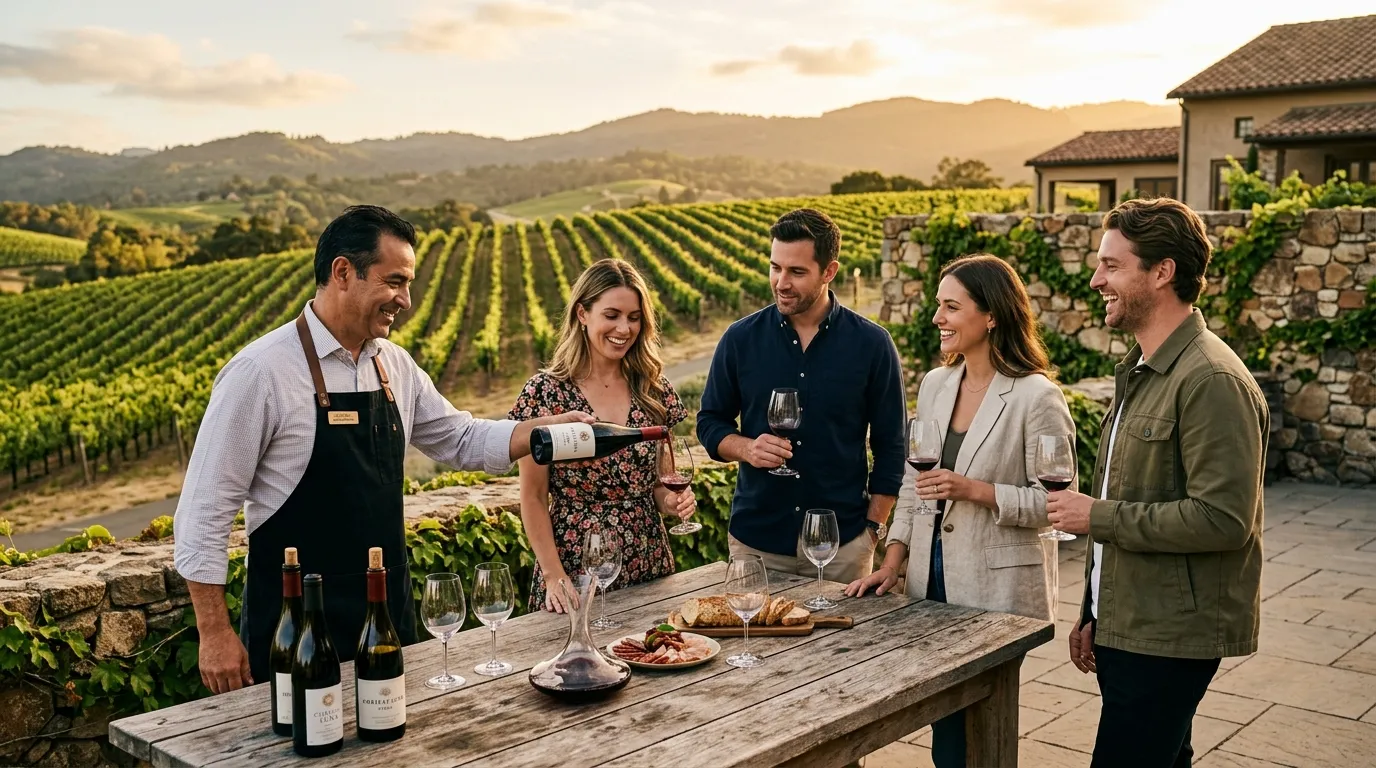
Wine tourism is one of the fastest-growing segments in the experience economy, and for good reason. Travelers aren’t just buying a tasting — they’re buying a day of discovery, scenic landscapes, and stories behind every bottle. If you’ve been thinking about how to start a wine tour business, the timing is excellent.
This guide covers every step from choosing your region to scaling your fleet, with real numbers and strategies drawn from successful operators across the country.
Why Wine Tourism Is Booming
The U.S. wine tourism market generates over $20 billion annually, and it’s growing steadily. Wineries across the country reported record tasting room visits in recent years, driven by millennials and Gen X travelers who prioritize experiences over material goods.
A few trends working in your favor:
- Emerging wine regions are multiplying. It’s no longer just Napa and Sonoma. Texas Hill Country, Virginia’s Monticello AVA, Oregon’s Willamette Valley, Michigan’s Old Mission Peninsula, and Arizona’s Verde Valley are all seeing surges in visitor traffic.
- The “experience economy” keeps expanding. Travelers increasingly choose curated, local experiences over generic sightseeing. Wine tours sit squarely in that sweet spot.
- Group travel is back. Bachelorette parties, corporate retreats, and birthday celebrations drive a significant portion of wine tour bookings — often at premium pricing.
- Demographics favor you. Wine drinkers skew toward higher household incomes, which means stronger per-person spending and willingness to pay for quality.
The barrier to entry is lower than most people think, and the margins can be attractive once you establish winery relationships and build a loyal customer base.
Choosing Your Wine Region and Niche
Your region defines everything: your partnerships, your pricing ceiling, your competitive landscape, and your seasonal calendar.
Established regions like Napa Valley, Sonoma County, and Paso Robles offer built-in demand but come with fierce competition and higher operating costs. You’ll need a sharp differentiator — perhaps a focus on small-production wineries that don’t have their own tasting rooms, or a specific angle like organic and biodynamic producers.
Emerging regions offer less competition and often more cooperative wineries eager for foot traffic. Think Finger Lakes (New York), Charlottesville (Virginia), Walla Walla (Washington), or the Texas Hill Country corridor between Austin and Fredericksburg. In these markets, you might be one of only a handful of tour operators, giving you room to establish yourself as the go-to option.
Beyond geography, consider your niche:
- Luxury private tours — high-touch, small groups (2-6 guests), premium vehicles, behind-the-scenes winery access
- Social group tours — bachelorette parties, birthdays, corporate team outings
- Educational wine tours — led by sommeliers, focused on terroir, winemaking process, and structured tastings
- Food and wine pairings — combining winery visits with local restaurants, farms, or a catered picnic
- Seasonal harvest experiences — grape stomps, blending sessions, barrel tastings during crush season
The more specific your niche, the easier it is to market and the harder it is for generic competitors to replicate.
Building Winery Partnerships
Your relationships with wineries are the backbone of your business. Without strong partnerships, you’re just a transportation company.
What’s in it for the winery? You bring them a steady stream of paying visitors who are primed to buy. Most tasting room visitors who arrive on a guided tour spend more per person than walk-ins because they’re already in a buying mood and often feeling celebratory. Wineries also benefit from the exposure to new customers who might not have discovered them on their own.
How to approach tasting rooms:
- Visit first as a customer. Experience their tasting, note the flow, meet the staff. This gives you genuine knowledge and a natural opening for conversation.
- Bring a one-page proposal. Outline your tour concept, target audience, expected group sizes, and frequency. Wineries want to know how often you’ll visit and how many guests you’ll bring.
- Negotiate tasting fees. Many wineries will offer discounted group tasting rates (often 20-30% off) in exchange for guaranteed volume. Some waive tasting fees entirely if your groups consistently purchase bottles.
- Start with 6-8 wineries. You’ll rotate 3-4 per tour, giving you flexibility to adjust based on guest preferences and seasonal availability.
- Formalize the relationship. Even a simple written agreement that outlines expectations, cancellation policies, and group minimums protects both sides.
The wineries that are hardest to get into (the cult producers, the appointment-only estates) become your biggest selling point. If you can offer access that guests can’t get on their own, you’ve built a moat around your business.
Vehicle Selection
Your vehicle is both your biggest asset and your largest expense. Choose carefully.
Mercedes Sprinter Van (12-14 passengers) — The industry standard for good reason. Professional appearance, comfortable seating, good headroom, and enough cargo space for wine purchases. A new Sprinter runs $55,000-80,000; used models start around $30,000-45,000. Leasing runs $800-1,200/month.
Full-size SUV (5-7 passengers) — Ideal for private and luxury tours. Lower upfront cost ($40,000-60,000 new) and easier to drive through narrow vineyard roads. The trade-off is fewer passengers per trip.
Limo or Party Bus (10-20+ passengers) — Appeals to the bachelorette and birthday crowd. Higher revenue per trip but significantly higher insurance costs and maintenance.
Mini Coach (20-30 passengers) — Makes sense once you’re running regular scheduled tours or large corporate groups.
Most successful operators start with a single leased Sprinter van. It’s versatile enough for both private groups and scheduled shared tours, and leasing keeps your startup costs manageable while you prove the business model.
Don’t overlook the interior. Guests notice clean upholstery, working air conditioning, a cooler for purchased bottles, phone charging ports, and a sound system for setting the mood between stops.
Business Formation and Licensing
Getting your legal foundation right early prevents expensive problems later. For a thorough overview of business basics, check out our guide to starting a tour company.
Business structure. An LLC is the most common choice for wine tour operators. It separates your personal assets from business liabilities — critical when you’re transporting passengers — and offers flexible tax treatment. Formation costs range from $50-500 depending on your state.
Transportation permits. If you’re carrying paying passengers, most states require a TCP (Transportation Charter-Party) permit or equivalent. In California, this means registering with the CPUC. Other states have similar agencies. The application typically requires proof of insurance, vehicle inspection, and a clean driving record. Budget $500-2,000 for permits and fees.
Commercial auto insurance. This is non-negotiable and more expensive than personal auto insurance. Expect $3,000-8,000 annually for a single vehicle with commercial passenger coverage.
General liability insurance. Beyond your vehicle policy, you need general business liability insurance. Many wineries will require proof of at least $1 million in coverage before they’ll partner with you. Budget $1,000-3,000 annually.
Liquor considerations. If you serve wine or champagne on the vehicle (a common luxury touch), you’ll likely need a special permit. The rules vary dramatically by state and even by county, so consult your state’s ABC board before making promises to customers.
DOT number. If your vehicle seats 9+ passengers (including the driver), you may need a USDOT number and be subject to federal motor carrier regulations.
Designing Your Tour Experience
The actual tour experience is where you differentiate yourself. A thoughtful itinerary turns first-time guests into repeat customers and referral machines.
Number of stops. Three to four wineries is the sweet spot for a full-day tour (5-6 hours). Fewer feels thin; more feels rushed. Each stop should last 45-60 minutes, with 15-20 minutes of scenic drive time between them.
Pacing and flow. Start with a lighter, crowd-pleasing winery to warm up the group. Build toward your most impressive or unique stop in the middle when energy is highest. End at a winery with a great outdoor space or view where guests can relax and reflect on the day.
Food is essential. Wine on an empty stomach is a liability — literally and figuratively. Build lunch or substantial snacks into every tour. Options include a catered picnic at a scenic vineyard, a stop at a local restaurant known for wine-country cuisine, or a charcuterie spread prepared in advance. Food elevates the experience and justifies higher pricing.
Storytelling separates great tours from good ones. Between stops, share the history of the region, the unique geology that shapes the terroir, the stories behind the winemakers you’re about to visit. Guests should feel like they’re learning something they couldn’t get from a self-guided visit.
The small touches matter. Chilled water bottles, a printed itinerary card, a small tasting journal for notes, a curated playlist for the drive — these details cost almost nothing but create a polished, professional impression.
Pricing Strategy
Wine tour pricing varies widely by region, tour type, and positioning.
Common pricing models:
- Per-person shared tours: $100-175 per person, 8-14 guests, all-inclusive (transportation, tastings, lunch)
- Private group tours: $800-2,000 per vehicle for up to 10-14 guests, all-inclusive
- Premium/VIP experiences: $200-400+ per person, small groups, exclusive access, sommelier-guided
What to include in the price. The most successful operators use all-inclusive pricing — transportation, all tasting fees, food, and water. When everything is included, guests relax and enjoy themselves instead of mentally tracking costs.
Deposits and cancellation policies. Require a 50% deposit at booking and full payment 48-72 hours before the tour. A clear cancellation policy (full refund 7+ days out, 50% refund 3-7 days, no refund within 48 hours) protects your revenue and reduces no-shows.
Your Online Presence
In wine tourism, your website does the selling. Guests research extensively before booking — they compare options, read reviews, and look at photos. Your online presence needs to be as polished as the experience itself.
A booking-ready website is non-negotiable. Your site needs to clearly display your tour options, pricing, availability calendar, and a frictionless booking flow. Guests who can’t book immediately will move on. A purpose-built platform like Gondola gives you a wine tour website with integrated booking, mobile-first design, and SEO optimization out of the box.
Photography sells wine tours. Invest in professional photos of your vehicle, your winery partners’ properties, happy guests clinking glasses, and the scenic landscapes along your route.
Reviews are your currency. After every tour, send a follow-up email asking for a Google review. A wine tour business with 50+ five-star reviews dominates local search results.
Instagram is your best social channel. Wine tours are inherently photogenic. Post consistently: scenic vineyard shots, behind-the-scenes moments, guest photos (with permission), wine close-ups, and sunset views from the van.
Google Business Profile. Set this up immediately and keep it current. For many wine tour businesses, Google Business Profile drives more bookings than any other channel.
Marketing That Fills Your Calendar
Hotel and resort partnerships. Concierges and front desk staff are trusted advisors for travelers. Introduce yourself to every hotel, B&B, and vacation rental manager in your region. Offer them a commission (10-15%) or comp a staff member on a tour so they can genuinely recommend you.
Restaurant and tasting room cross-promotion. Partner with wine bars, upscale restaurants, and wine shops to display your brochures and offer their customers a booking discount.
The wedding and event market. Wine tours are a natural fit for rehearsal dinners, bachelor/bachelorette parties, and wedding-weekend activities. Connect with wedding planners, bridal shops, and event venues.
Corporate events and team building. Companies increasingly choose wine tours for team outings, client entertainment, and holiday parties. Corporate bookings often happen midweek (filling your slow days) and typically book larger groups at premium pricing.
Email marketing. Build your list from day one. Send quarterly newsletters featuring new winery partners, seasonal specials, and wine region news.
OTA listings. Platforms like Viator, GetYourGuide, and Airbnb Experiences bring visibility but charge 20-30% commissions. Use them strategically to fill empty seats, but invest in driving direct bookings through your own website.
Scaling Your Wine Tour Business
Once you’ve proven the model with a single vehicle and consistent bookings, growth paths include:
Adding vehicles. Your second vehicle should be a different type than your first to expand your offering.
Hiring guides. Look for people with wine knowledge (WSET certification is a strong signal), natural storytelling ability, and a clean driving record with a commercial license.
Expanding your route portfolio. A “Sparkling Wine Trail,” “Red Blend Journey,” or “Harvest Season Special” gives repeat customers a reason to book again.
New revenue streams. Consider wine club partnerships (earn a referral fee when your guests sign up), branded merchandise, private event hosting, and wine education workshops during the off-season.
Expanding to new regions. If you’ve saturated your home market, consider launching in a nearby wine region. The operational playbook transfers directly.
The wine tour business rewards operators who combine genuine passion for wine with disciplined business execution. Start lean, build strong partnerships, deliver an experience worth talking about, and the growth takes care of itself.
Frequently Asked Questions
Startup costs range from $15,000 to $100,000 depending on whether you lease or purchase a vehicle. A basic operation with a leased van costs roughly $15,000-30,000 to launch: vehicle lease ($5,000-12,000/year), commercial insurance ($3,000-8,000/year), business licensing ($500-2,000), website and booking system ($1,000-3,000), and initial marketing ($2,000-5,000). Operators who buy a luxury sprinter van invest $60,000-100,000 upfront.
Generally no — if you're transporting guests to wineries where the venues pour the wine, you don't need a liquor license yourself. However, if you serve wine on the vehicle (common for luxury tours), you'll need a special permit in most states. Some states require a charter bus or livery license if you're transporting paying passengers. Check your state's ABC (Alcoholic Beverage Control) board and DMV for specific requirements.
Wine tours typically charge $100-250 per person for a full-day experience with 3-5 winery stops, transportation, and light food. Half-day tours run $75-150. Premium experiences with private tastings, food pairings, or luxury vehicles command $200-400+ per person. The sweet spot in most wine regions is $125-175 per person for a 5-6 hour tour with 3-4 stops.