Tour Operator Insurance: A Complete Guide
Tour operator insurance isn’t the reason you got into this business. You started because you love sharing experiences with people — whether that’s leading kayak tours through sea caves, driving ATVs through desert trails, or walking guests through a city’s hidden food scene. Insurance is the unglamorous paperwork that sits between you and doing what you actually care about.
But here’s the reality: one guest injury without proper coverage can end your business overnight. Not in a dramatic, made-for-TV way — in a slow, grinding, legal-fees-eating-your-savings way. Tour operator insurance is the set of policies that protect your business from financial losses due to accidents, injuries, property damage, professional mistakes, and other risks inherent in running tours and activities. Getting it right from the start is one of the smartest things you can do as an operator.
This guide breaks down what coverage you actually need, what it costs, and where most operators get caught with gaps they didn’t know existed.
Types of Insurance Tour Operators Need
Not every operator needs every type of policy. A walking food tour in Nashville has a very different risk profile than a boat tour operation in the Florida Keys. But understanding the full landscape helps you make informed decisions rather than just buying whatever your insurance broker suggests first.
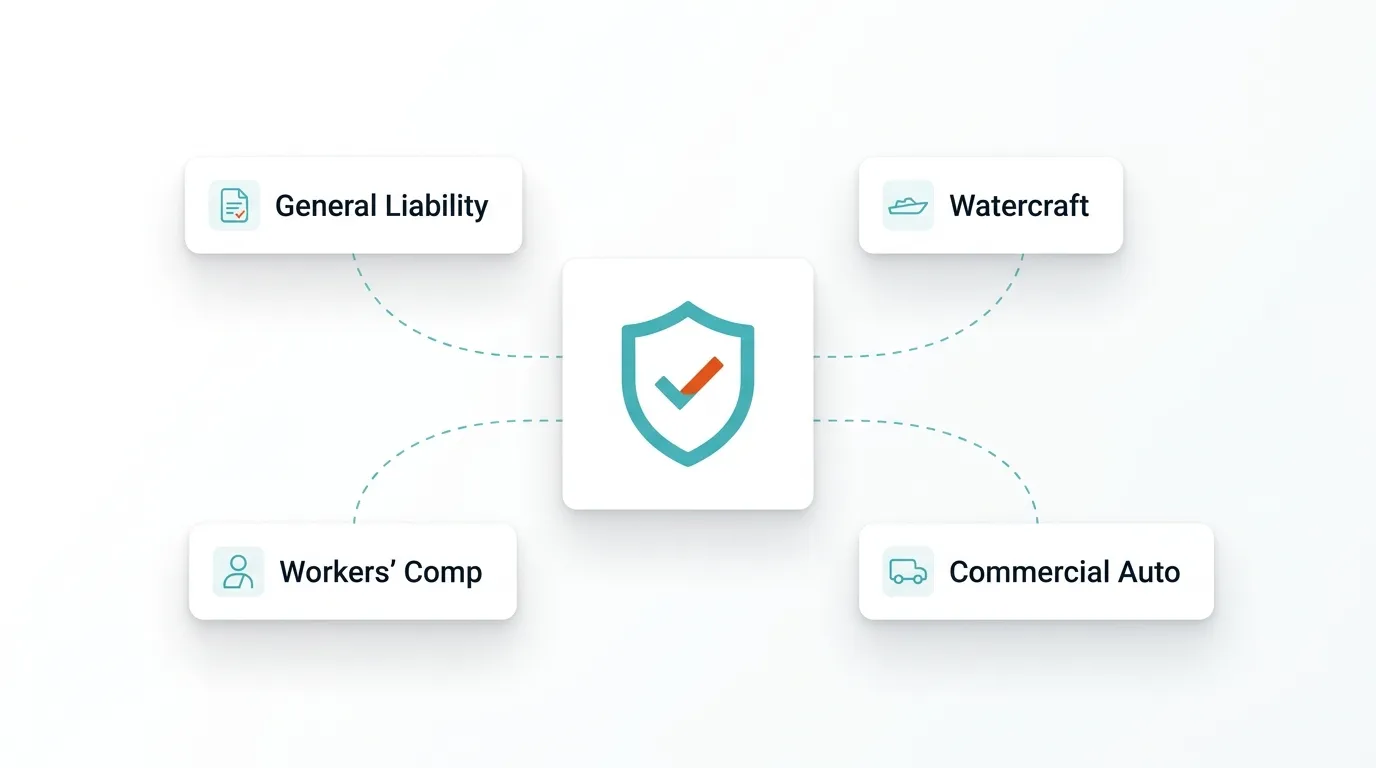
General Liability Insurance
This is the baseline. If you carry only one policy, this is it.
General liability covers third-party bodily injury and property damage claims. If a guest trips on your equipment, gets hurt during an activity, or their property is damaged while on your tour, this policy responds.
Typical coverage limits are $1 million per occurrence and $2 million aggregate. Most venues, booking platforms, and partner businesses will ask to see proof of general liability before they work with you. It’s not optional in practice, even in jurisdictions where it’s not legally required.
What it covers: Guest injuries, third-party property damage, legal defense costs, medical payments for minor injuries.
What it doesn’t cover: Your own injuries, your employees’ injuries, damage to your own property, or intentional acts.
Professional Liability (Errors & Omissions)
Professional liability insurance — sometimes called E&O insurance — covers claims that arise from your professional advice or services. For tour operators, this applies when a guest claims your guidance, recommendations, or tour planning caused them harm.
Say you recommend a restaurant and a guest gets food poisoning. Or you plan a multi-day itinerary and a connection fails, costing the guest money. These are professional liability scenarios, not general liability ones.
This coverage matters more for operators who sell complex packages, multi-day itineraries, or provide consulting-style services. If you run a straightforward two-hour city tour, the risk is lower — but not zero.
Commercial Auto Insurance
If you transport guests in any vehicle — vans, buses, boats, ATVs, golf carts — your personal auto insurance will not cover commercial use. Full stop. Personal policies exclude business activities, and an insurer will deny a claim the moment they find out guests were paying customers.
Commercial auto insurance covers liability for accidents involving your business vehicles, as well as physical damage to the vehicles themselves. If you operate ATV tours or any motorized activity, this is non-negotiable.
Even if you use a personal vehicle to shuttle guests to a trailhead, that’s commercial use. The line is simple: if the vehicle is part of the service people are paying for, you need commercial coverage.
Workers’ Compensation
If you have employees — tour guides, drivers, office staff, seasonal help — most states require workers’ compensation insurance. It covers medical expenses and lost wages when an employee is injured on the job.
The tour industry has higher-than-average injury rates for field employees. Guides work outdoors in variable conditions, handle equipment, and manage groups of strangers. Workers’ comp isn’t just a legal requirement; it’s protection against claims that could be far more expensive than the premiums.
Even in states where workers’ comp isn’t mandated for very small businesses, carrying it is wise. An employee injury lawsuit without coverage can be financially devastating.
Watercraft and Adventure Sports Coverage
Standard general liability policies often exclude or limit coverage for water-based activities and high-risk adventure sports. If your business involves boats, jet skis, kayaks, snorkeling, zip lines, rock climbing, or similar activities, you need specialized endorsements or separate policies.
Boat tour operators need watercraft liability that covers passenger injuries, collision damage, and environmental liability (fuel spills, for example). The Jones Act adds another layer of complexity for operations on navigable waters, potentially exposing you to federal maritime liability.
Adventure sports coverage is its own category. Insurers assess these risks differently than standard tourism activities, and premiums reflect that. A jet ski rental operation will pay significantly more than a walking tour — but the potential liability exposure is also significantly higher.
Property Insurance
If you own or lease physical assets — an office, a storefront, a warehouse full of kayaks, a fleet of Segways — property insurance covers damage or loss from fire, theft, vandalism, and certain natural disasters.
This also extends to business personal property: computers, booking systems, safety equipment, and specialized gear. If a fire destroyed your storage facility tomorrow, property insurance is what lets you replace everything and keep operating.
Cyber Liability Insurance
This one surprises operators, but it’s increasingly relevant. If you handle customer payments, store personal data (names, emails, credit card information), or run an online booking system, you have cyber risk.
A data breach can trigger notification requirements, legal costs, and regulatory fines — even for a small business. Cyber liability insurance covers the cost of responding to a breach, notifying affected customers, and defending against resulting claims.
You don’t need to be a tech company to be a target. Small businesses with basic security are often the easiest targets for automated attacks.
How Much Does Tour Operator Insurance Cost?
Insurance costs vary widely based on what you do and where you do it. Here are realistic ranges based on activity type:
| Activity Type | Annual General Liability Cost |
|---|---|
| Walking / food / city tours | $500 - $1,200 |
| Hiking / nature tours | $800 - $1,500 |
| Bike tours | $1,000 - $2,000 |
| Kayak / paddleboard tours | $1,500 - $3,000 |
| Boat tours and charters | $2,000 - $5,000 |
| ATV / off-road tours | $3,000 - $8,000 |
| Jet ski rentals | $5,000 - $15,000 |
| Skydiving / bungee / extreme sports | $10,000 - $25,000+ |
These are general liability ranges only. Add commercial auto ($1,200 - $4,000/year), workers’ comp ($2,000 - $8,000/year depending on payroll and risk class), and any specialty endorsements, and your total insurance spend can be a meaningful line item in your operating budget.
The silver lining: insurance is a tax-deductible business expense. And compared to one uninsured claim, even the most expensive premiums look like a bargain.
Factors That Affect Your Premiums
Insurers aren’t pulling numbers out of thin air. Several factors directly influence what you’ll pay:
Activity risk level. This is the biggest factor. An insurer views a walking tour and a whitewater rafting operation as completely different risk profiles. The more potential for bodily injury, the higher the premium.
Location. Operating in a litigation-heavy state like California or Florida costs more than operating in a state with tort reform. International operations add complexity and cost.
Annual revenue and participant count. More guests means more exposure. Insurers typically ask for your projected annual revenue and the number of participants you expect to serve.
Safety record and claims history. A clean claims history is your best negotiating tool. Operators with prior claims will pay significantly more.
Experience and certifications. Operators with relevant certifications (wilderness first responder, CPR/AED, Coast Guard licenses) can sometimes negotiate lower premiums.
Group sizes. Larger groups create more exposure per tour. An operator running groups of 30 will typically pay more than one capping tours at 8 guests.
How to Choose an Insurance Provider
Work with tourism-specialized insurers. Companies like Veracity Insurance Solutions, XINSURANCE, and Granite Insurance specialize in adventure and tourism businesses. A generalist broker might leave gaps they don’t even know about.
Get at least three quotes. Pricing varies significantly between insurers, especially for higher-risk activities.
Ask the right questions:
- Does this policy cover all the specific activities I offer?
- Are there any exclusions I should know about?
- What’s the claims process?
- Can I add additional insureds (venues, partners, booking platforms)?
- What happens if I add a new activity type mid-year?
Read the exclusions. The exclusions section is more important than the coverage section. Common exclusions include alcohol-related incidents, participant negligence, acts of war or terrorism, and specific high-risk activities.
Waivers and Liability Releases
Almost every tour operator uses waivers. They’re smart practice — but they’re not a replacement for insurance.
A well-drafted liability waiver asks participants to acknowledge the inherent risks of an activity and agree not to sue for injuries resulting from those known risks. In many states, properly executed waivers are enforceable.
But waivers have limits:
- They don’t protect against gross negligence. If your equipment was faulty or your guide was reckless, a waiver won’t save you.
- They may not hold up for minors. In many jurisdictions, a parent cannot waive a child’s right to sue.
- Enforceability varies by state. A waiver that’s bulletproof in Colorado might be worthless in New York.
- They don’t cover everything. Waivers typically address physical injury from the activity itself — not transportation accidents, food allergies, or data breaches.
Use waivers as one layer of protection alongside proper insurance. Never as a substitute. Have a local attorney who understands recreation law draft or review your waiver.
Insurance Requirements from Booking Platforms
If you sell through OTAs or booking platforms, expect insurance requirements as part of onboarding.
Viator / TripAdvisor requires operators to carry general liability insurance and may request certificates of insurance.
FareHarbor doesn’t sell insurance, but many venues and partners require proof of insurance before allowing operators to run activities on their premises.
GetYourGuide has similar requirements and may ask to be named as an additional insured on your policy.
Airbnb Experiences has its own liability insurance program but it’s not a substitute for your own policy.
Having proper insurance isn’t just about protecting yourself — it’s a prerequisite for accessing the distribution channels where your customers are shopping.
Common Insurance Mistakes
Relying on personal insurance for business activities. Your personal auto and homeowner’s policies don’t cover commercial tour operations.
Underinsuring for the actual activities offered. If you added kayaking after your policy was written for walking tours, that kayaking may not be covered.
Ignoring the transportation gap. Many operators have general liability but forget about commercial auto.
Not naming additional insureds. Venues and partners often require this — it’s usually cheap or free to add.
Skipping cyber liability. If you have a booking system, you’re handling sensitive data.
Letting coverage lapse. A gap in coverage, even for a day, can be catastrophic if an incident happens during that gap.
Getting Started
If you’re starting a tour company, insurance should be one of your first line items. Here’s a practical sequence:
- List every activity you offer (or plan to offer), including transportation.
- Contact 2-3 tourism-specialized insurance brokers and describe your operations in detail.
- Get quotes for general liability at minimum, plus commercial auto and workers’ comp if applicable.
- Read the exclusions carefully before signing anything.
- Set up your waivers with help from a recreation law attorney.
- Build insurance costs into your pricing so they don’t eat your margins.
- Review your coverage annually and update it whenever your operations change.
Your website is often where prospective guests form their first impression of your business — and where booking platforms and partners go to evaluate you. Having a professional site built on a platform like Gondola that’s purpose-built for tour and activity operators signals that you run a legitimate, trustworthy operation.
Insurance isn’t exciting. But it’s the foundation that lets you do everything else with confidence. Get it right early, review it regularly, and you’ll never have to learn the hard way what happens when you don’t have it.
Frequently Asked Questions
General liability insurance for tour operators typically costs $500-3,000 per year depending on the activity risk level, number of participants, and location. Water-based and adventure activities cost more. A basic walking tour operation might pay $500-800/year, while a jet ski rental or skydiving operation could pay $5,000-15,000/year. Always get quotes from multiple insurers who specialize in the tourism industry.
At minimum, you need general liability insurance (protects against third-party injury claims), commercial auto insurance (if you transport guests), and workers' compensation (if you have employees). Depending on your activity, you may also need professional liability, watercraft liability, or adventure sports coverage. Many booking platforms and venues require proof of insurance before they'll work with you.
Standard general liability insurance does not cover weather cancellations. For that, you need event cancellation insurance or business interruption insurance. Some operators build weather cancellation policies into their terms of service instead, offering rescheduling or credits rather than full refunds. Check your policy carefully — the coverage gap between liability and cancellation is where many operators get surprised.